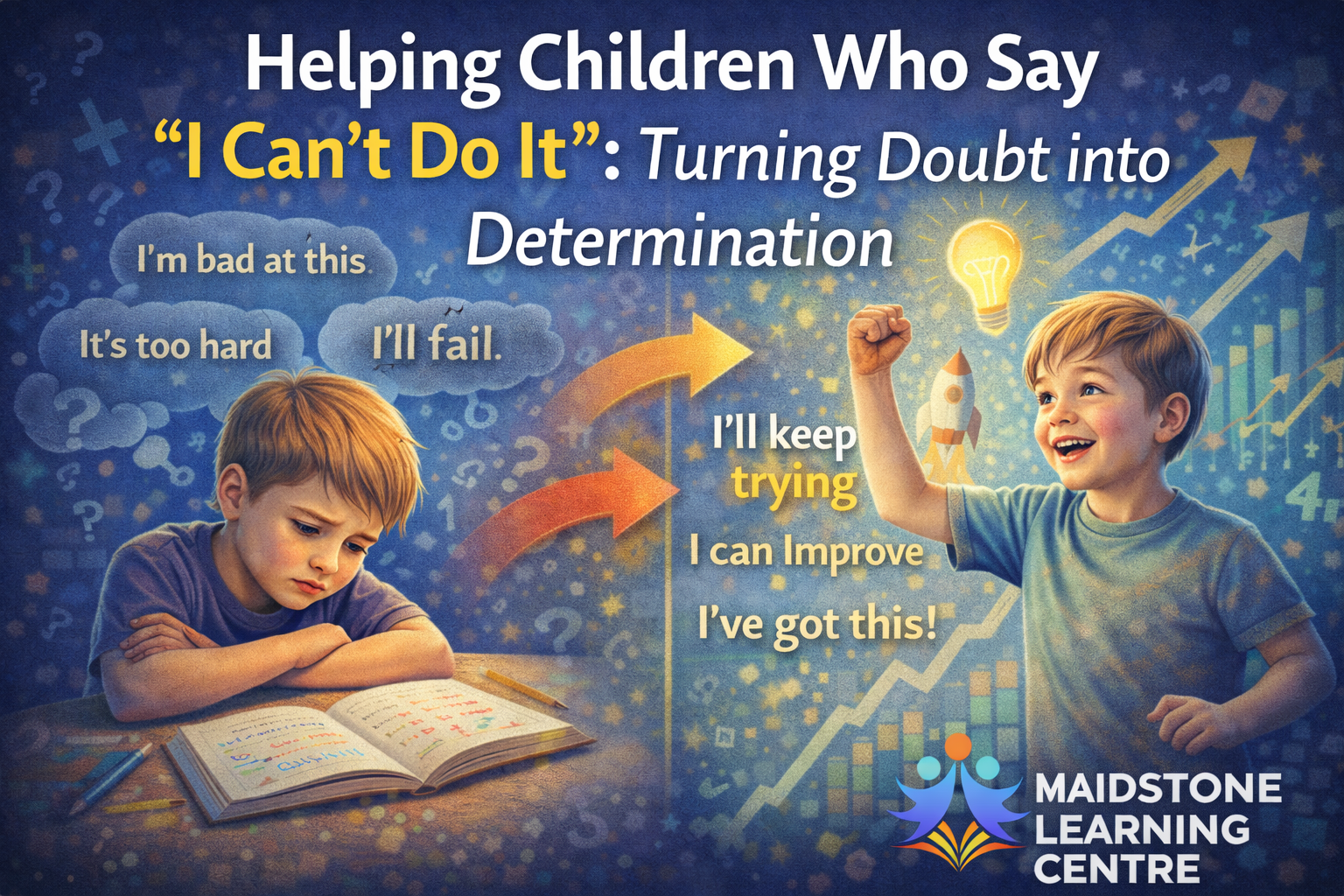
Helping Children Who Say “I Can’t Do It”: Turning Doubt into Determination
Every Learner Needs a Little Courage and a Lot of Support
“I can’t do this.”
“This is too hard.”
“I’m just not good at it.”
Sound familiar? For many children, these phrases come out not from laziness or lack of ability but from fear, past failures, or low self-confidence. At Maidstone Learning Centre, we hear them too and we gently guide children to a new mindset: “I can’t do it… yet.”
With patience, praise, and the right strategies, self-doubt can become determination.
Why Children Say “I Can’t”
Negative self-talk is often a defence mechanism. It can come from:
- Repeated struggles in school
- Fear of failure or embarrassment
- Perfectionism wanting to get it right first time
- Comparisons to siblings or classmates
- Not understanding what’s being asked
It’s a sign that your child feels unsafe, overwhelmed, or discouraged not that they’re unwilling to try.
The Impact of Self-Doubt on Learning
When children believe they “can’t,” they stop trying. That means they:
- Avoid challenging tasks
- Withdraw in lessons
- Stop asking questions
- Become frustrated or emotional
- Form a fixed mindset (“I’m not good at maths/reading”)
The longer this cycle continues, the harder it is to break. That’s why early support is key.
How MLC Rebuilds Confidence
At MLC, we specialise in supporting children who feel stuck, discouraged, or behind. Here’s how we turn “I can’t” into “I’ll try”:
Praise the Process– We focus on what they did, not just what they got right:
“You didn’t give up.”
“You tried a different way; that’s smart.”
Create Safe Spaces – In small groups or 1-to-1, children feel less judged and more open to learning.
Break Tasks Into Steps– We scaffold challenges so that progress feels achievable.
Celebrate Small Wins– Even finishing a tricky question or reading aloud gets a “well done.”
Teach Positive Self-Talk– We model growth mindset language:
“It’s okay to find it hard, that’s how you grow.”
“Let’s figure it out together.”
What You Can Do at Home
Parents play a huge role in helping children reframe self-doubt. Try these ideas:
- Praise effort, not outcome: “You stuck with it; I’m proud of that.”
- Talk about challenges you’ve faced, show that struggle is normal.
- Replace “I can’t” with “You’re still learning and that’s okay.”
- Read stories with resilient characters.
- Avoid “It’s easy” instead say, “You’re getting better each time.”
Progress Starts with Belief
At MLC, we’ve seen hundreds of students shift from “I can’t” to “I can try.” And from there, confidence grows, progress follows, and the spark returns.
No child should feel defeated before they’ve begun. With support, encouragement, and the right tools, every child can move forward one brave step at a time.
Philip Moore
Well done MLC, this is great advise and not just for children!!