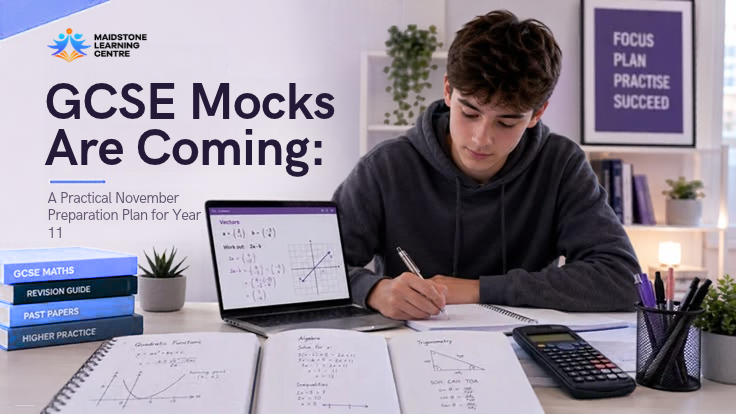
GCSE Mocks Are Coming: A Practical November Preparation Plan for Year 11
November mock examinations are approaching in many secondary schools. For Year 11 students, mocks are an important opportunity to practise exam conditions, identify gaps and understand how current performance may translate into grades.
They are not the final GCSE examinations—but they should still be taken seriously.
The end of October is the right time to move from vague intentions to a practical revision plan.
Start with a baseline
Before creating a timetable, students need to know what requires attention.
For each subject, divide topics into:
secure;
partly secure; and
weak or forgotten.
Use recent tests, teacher feedback, homework and a small set of exam questions. Do not spend hours making beautiful lists without testing knowledge.
The purpose of a baseline is to direct revision.
Make tasks specific
“Revise Chemistry” is too broad. Useful tasks look like this:
learn the required practical for rates of reaction;
answer six questions on bonding;
mark the answers using the mark scheme;
correct errors in a different colour; and
retest the same content two days later.
Every session should have a clear topic, method and outcome.
Balance knowledge and exam technique
Some students know the content but lose marks because they misunderstand command words, omit working, give answers that lack detail or manage time poorly.
Others practise exam papers repeatedly without knowing enough content to improve.
A balanced revision week includes:
- learning or reviewing knowledge;
- recalling it without notes;
- applying it to exam questions;
- marking and correcting mistakes; and
- revisiting the topic later.
Build a realistic timetable
Students do not need to revise every subject every evening. A manageable plan may include two focused sessions on school nights and slightly longer sessions at the weekend.
Include breaks, meals, sleep and existing commitments. A timetable that ignores real life will not survive.
Use shorter sessions for difficult subjects if avoidance is a problem. Beginning with twenty focused minutes is better than postponing an unrealistic two-hour block.
Treat mistakes as revision instructions
Marking is not the end of a practice paper. Students should ask:
Did I lack the knowledge?
Did I misunderstand the question?
Was my answer too vague?
Did I forget a method?
Did I run out of time?
The answer determines what to do next. Simply recording a percentage does not improve performance.
Parents: provide structure without taking over
Parents can help by checking that a plan exists, providing a suitable place to work and asking what was learnt. Avoid policing every minute or turning every evening into an argument.
Try asking:
“What topic did you work on?”
“What mistake did you correct?”
“What will you revisit next?”
These questions encourage accountability and reflection.
At Maidstone Learning Centre, our GCSE support combines subject teaching, exam practice, feedback and help developing consistent study habits. Mocks should provide useful evidence about the next stage of preparation—not arrive as a complete surprise.
Start now. A steady November plan is far more effective than panic the night before.
Contact MLC about GCSE Maths, English and Science support before the mock period begins.