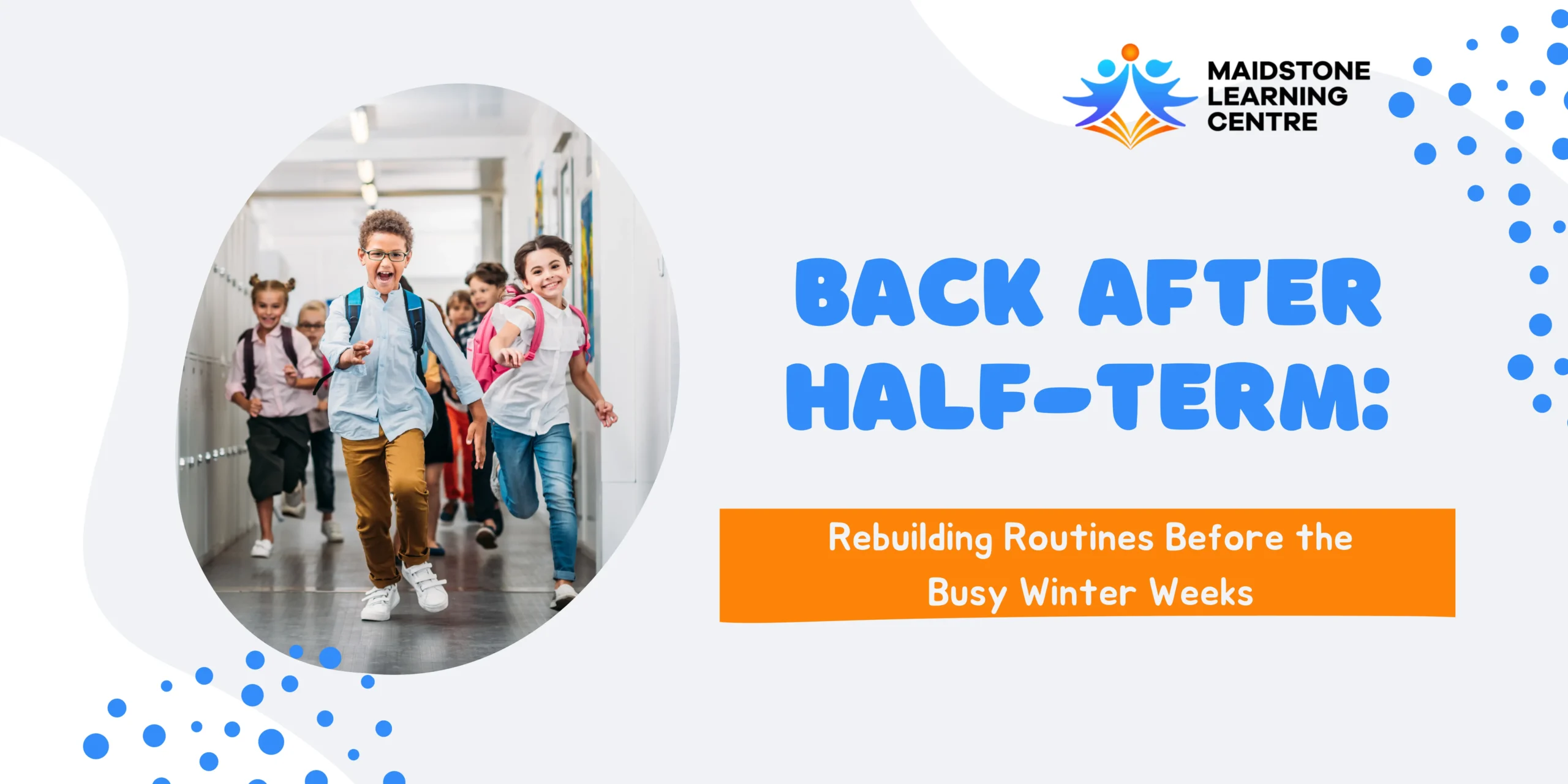
Back After Half-Term: Rebuilding Routines Before the Busy Winter Weeks
The return after October half-term can feel surprisingly difficult. The clocks have changed, mornings are darker and many children come back to school knowing that assessments, GCSE mock examinations and end-of-term expectations are approaching.
A hesitant first week does not mean that a child has lost motivation. It often means that their body clock, concentration and confidence need a few days of steady support. The most useful response is not a dramatic new timetable. It is a calm return to the habits that make learning possible.
Reset the foundations first
Before adding extra revision, check the basics. Children learn better when they are rested, fed, organised and clear about what is expected. A regular bedtime, a prepared school bag and a predictable homework time will do more than an ambitious plan that nobody can sustain.
- Move bedtime back gradually if the holiday routine became later.
- Prepare uniform, equipment and travel arrangements the night before.
- Choose one consistent place for homework and revision.
- Check the school calendar for assessments, parents’ evenings and mock dates.
- Build in genuine rest after school before asking for focused work.
Use a one-week learning check
Ask your child to show you what they are studying rather than asking only whether they have homework. Look through exercise books, online platforms and recent feedback together. The aim is to identify one or two priorities, not to catalogue every mistake.
For a younger child, the priority may be reading fluency, spelling patterns or times-table recall. For a GCSE student, it may be completing missing notes, learning key quotations or revisiting a weak Maths topic before mocks.
Prepare for pressure without creating panic
Many Year 11 pupils sit mock examinations in November, December or January, depending on their school. Mocks matter because they reveal gaps, provide practice under timed conditions and help teachers plan support. They are not a final judgement on a pupil’s summer result.
A helpful family message is: ‘We will take this seriously, make a realistic plan and use the result to decide what to work on next.’ This keeps ambition high without making one assessment feel like a verdict.
Know when to seek support
Contact school or tuition staff if your child is persistently overwhelmed, avoiding work, unable to explain what they are learning or falling behind across several subjects. Early support is easier to organise before deadlines and anxiety accumulate.
At Maidstone Learning Centre, we help families turn broad worries into a clear learning plan. The goal is not to fill every evening with work; it is to use the available time purposefully.
If your child has returned from half-term unsure, anxious or behind, contact Maidstone Learning Centre to discuss the right academic support.